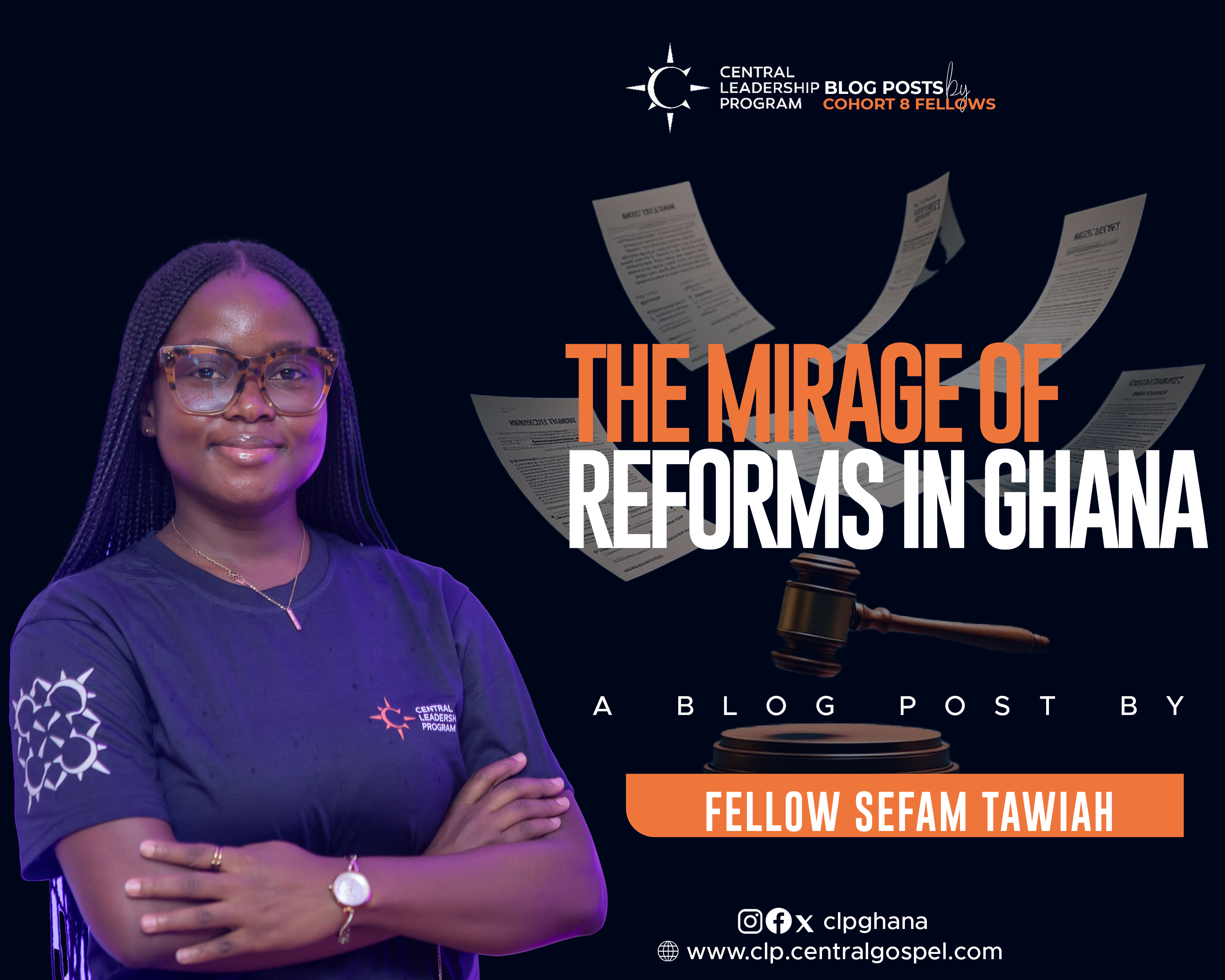
The Ghana we want rests in the policies we make now! If you had a seat at the policy-making table, would you treat it as trial and error?
When I first learned about mirages in Junior High School (JHS), I was extremely fascinated. That idea of being super confident about something you can clearly see, then getting closer and questioning that strong conviction. In quite recent times, I have noticed that Ghana’s policy landscape has produced its own version of this trick, again and again. A reform is announced with confidence, sometimes even with fanfare. On first announcement, both policy-makers and citizens are zealous, optimistic, and hopeful that something is about to shift. Then within weeks, months, or even days, the public backlash begins: policy-makers quietly withdraw or loudly reverse the same policy they announced with zeal. For me, it always leaves behind that faint embarrassment of a government that speaks before it thinks.

A promise on the horizon — real enough to reach for, gone the moment you arrive.
A few months ago, in trying to understand policy-making, I came across a case study on “Flip Flopping the Education System” - a policy that sought to introduce a new semester-based academic calendar for basic schools in 2022. This reading put me in thinking mode, so I decided to do some comparative analysis. I noticed a pattern of policies that follow the script of mirages so precisely: policies that vanish on contact.
In Ghana, some major policy announcements are made before due diligence is carried out. Policies are handed to the public before they are explained to the people who would have to carry them out (stakeholders). Most policies follow a pattern: decide first, announce second, consult never, and then discover the resistance when it is already too late to plan around it.

A decision made at the head of the table, while the seat for the stakeholder stays empty.
The press releases are not the finished product! A policy becomes real once it survives contact with the people who must live with it, implement it, or pay for it.
Consultation must not happen after a policy fails. It must occur before policies are announced; otherwise, this mirage will keep reappearing. If we want to see the change we want, we cannot hesitate to treat policies as trial and error. Proper stakeholder engagement should not be an undervalued step.
Others may argue that bringing everyone on board slows the process down, and on the surface, that argument sounds reasonable. But it rests on a false comparison. The real choice was never between a fast decision and a slow one. It was between a measured process now and a much longer, messier one later. The semester system took barely a week to collapse once it reached the public, but the true cost was never that week. It was every hour spent afterward walking back the announcement, calming schools that had already begun adjusting, and rebuilding the credibility of the next policy from the same ministry. A structured consultation with a fixed deadline, even one lasting two or three weeks, would have been faster from start to finish than an announcement that had to be reversed and eventually redone properly. Skipping consultation does not remove the delay; it only postpones it and adds a trust problem on top.
If the goal is genuinely to move fast, then the answer is not to remove stakeholders from the process; it is to give the process a deadline. Consultation does not have to mean open-ended meetings with no end in sight. It can mean naming the relevant stakeholders early, setting a firm window for their input, and moving to implementation once that window closes. What makes a process slow is not the presence of other voices in the room; it is the absence of a timeline for hearing them.
So what should the right way look like? It starts with sequence. Before a policy is written into a press release, the people who will carry it out should already know it is coming and should have had a real chance to flag what will not work. This is different from simply informing them after the decision is made; it means their input can still change the outcome. Government should also learn to explain the reasoning behind a policy and not just the outcome, because a public that understands why a decision was made is a public far less likely to revolt against it the moment it feels unfamiliar.
None of this asks government to be slower or less ambitious. It asks government to be more deliberate about the order in which things happen. That is the difference between a policy that survives contact with reality and one that dissolves the moment reality shows up.

Every seat filled before the decision is made — the table Ghana's reforms deserve.
The Ghana we want rests in the policies we make now! If you had a seat at the policy-making table, would you treat it as trial and error? May our generation of leaders think and act differently.
We cannot keep waiting for outsiders to fix what we alone have the responsibility to fix. Nobody will manage Ghana's affairs with the seriousness we owe it more than we will. If we want a country that works, we must start treating policy-making itself as work, not as an announcement to be made and defended, but as a process to be respected from the very first conversation to the very last review. That responsibility does not belong to government alone; it belongs to every one of us who will one day sit at that table, in whatever capacity we find ourselves. The mirage keeps reappearing because we keep letting it. It is time our generation refused to.
Written by fellow Sefam Tawiah