In Ghana, we are proud of our reputation as warm and welcoming people. Yet beneath our hospitality, subtle lines still exist. Maybe the greatest threat to unity is not hatred. Maybe it is the quiet belief that some people matter a little less than others. Maybe it is the assumption that some people belong on the other side of an invisible line.
“You already know them, these Gen Zs. They're all lazy and entitled.” These are the words of a senior colleague to another concerning a new intern.
Now, even before the young intern has the opportunity to prove her capabilities, she is already expected to underperform. She goes about her job feeling like she’s not up to task because even her best efforts are not recognised.
Like the new intern, many of us at one point have felt out of place.
Maybe it was your first day at a new job. Maybe it was at a church event where everyone seemed to know each other except you. Maybe it was while travelling, when your accent immediately revealed that you were not from around there. Or perhaps it was in a room where conversations flowed easily between everyone else while you sat quietly, wondering where you fit in.
It is an uncomfortable feeling.
The feeling that everyone else belongs and you do not. The feeling of being "them." Most of us know what it feels like to be on the outside. We know what it feels like to be judged, overlooked, misunderstood, or excluded. We know the sting of assumptions and the frustration of having people form opinions about us before they know our story.
What is harder to admit is that many of us have also placed others there. Without realizing it, we draw lines. We separate people into categories. We build invisible groups. There is "us" and there is "them." Sometimes the line is drawn by race. Other times it is drawn by tribe, religion, nationality, politics, language, education, or social status. The labels may change, but the instinct remains the same.
The moment we decide who belongs and who does not, mental walls are raised.
A few months ago, after listening to “The Wall and the Bridge”, a spoken piece by Nigerian poet Dike Chukwumerije. One line in particular stayed with me. It said “No culture is older than being human.” This carries a challenge many of us would rather avoid. Because if we are honest, humanity is often not the first thing we see when we look at other people.
We see tribe. We see nationality. We see religion. We see political affiliation. We see social class. We see difference.
And sometimes, before a person even has the chance to introduce themselves, we have already decided whether they belong to "us" or "them."
In Ghana, we are proud of our reputation as warm and welcoming people. We celebrate our diversity and often point to the peace that exists among our many ethnic groups as one of our greatest strengths. Compared to many parts of the world, that pride is justified.
Yet beneath our hospitality, subtle lines still exist. Sometimes they appear in casual jokes about particular tribes. Sometimes they emerge in conversations about politics. Sometimes they surface when families discuss marriage. And sometimes they hide within a question that seems completely harmless: "Where are you from?"
Most of the time, it is simply a conversation starter. There is nothing wrong with being curious about someone's background. But occasionally, the question carries a different purpose. It is not about where someone lives. It is not even about where they were born. It is about deciding whether they are one of "us" or one of "them."
The answer may shape assumptions that follow. Assumptions about character. About trustworthiness. About intelligence. About behaviour. The person standing before us remains the same, but our perception of them changes. That is the danger of labels. They make it easy to reduce people to categories and categories are easier to judge than people.
Consider another simple example.
Picture a young man walking into a job interview. He has spent years studying, sacrificed weekends, endured stressful examinations, and worked hard to gain the qualifications necessary for the role. His application is strong. His references are excellent. He is confident that he has earned a fair chance.
Before he introduces himself, someone notices his surname and comments that, “People from that tribe are like this.” The room laughs.
Perhaps no one intends any harm. Perhaps it is dismissed as a joke. Yet something changes and suddenly, He is no longer viewed primarily as an individual. He becomes a representative of a stereotype. His achievements fade into the background and in that moment, he becomes "them."
The reality is that most prejudice does not begin with hatred. It begins with assumptions. It begins with stories we have inherited but never questioned. It begins with stereotypes repeated so often that they start sounding like facts.
The problem is that assumptions have consequences. They influence friendships, hiring decisions, marriages, opportunities, and over time, they influence the kind of society we build.
What strikes me most about Chukwumerije's poem is how he challenges the idea that some forms of discrimination are acceptable while others are not. If it is wrong to judge a person because of their race, why is it acceptable to judge them because of their tribe? If exclusion is painful when it happens to us, why do we find ways to justify it when it happens to someone else?
The questions are uncomfortable because they expose a contradiction many of us live with. We demand fairness when we are the outsider. But we are not always willing to extend that same fairness when we are comfortably on the inside.
A Ghanaian living abroad wants to be treated with dignity and respect. An African professional working overseas wants to be judged by competence rather than skin colour. A migrant hopes to be welcomed rather than stereotyped.
We understand equality perfectly when we need it ourselves. The challenge is remembering those same principles when someone else needs them. For Christians, this conversation carries an even deeper significance.
One of the things I find most remarkable about Jesus is how often He crossed lines that society expected Him to respect. While others built walls, He built bridges. He spoke to people others avoided. He welcomed people others rejected. He touched those society considered untouchable. He consistently moved toward the very people who had been pushed to the margins.
The story of the Good Samaritan illustrates this beautifully. Jesus deliberately chose a Samaritan, the outsider in the eyes of His audience, to demonstrate what true neighbourly love looks like. In doing so, He challenged deeply rooted prejudices and reminded His listeners that compassion is not limited by ethnicity, background, or social standing.
The lesson remains relevant today. It is difficult to read the Gospels and imagine Jesus being comfortable with the divisions that often separate us. Not because differences are unimportant. But because people are more important.
Our tribes, cultures and histories matter. But none of these things should determine the value we place on another human being. That is why the image of the wall and the bridge is so powerful. Both are built from choices. The wall is built with fear, suspicion, stereotypes, and exclusion.
The bridge is built with curiosity, empathy, understanding, and courage. Both begin in the heart. Every day, whether we realize it or not, we contribute to one or the other.
We build walls when we make assumptions before asking questions. We build walls when we reduce people to stereotypes. We build walls when we allow inherited prejudices to shape our relationships.
But we build bridges when we choose understanding over assumptions. We build bridges when we listen before judging. We build bridges when we create space for people who are different from us. Most importantly, we build bridges when we recognize ourselves in one another.
Because beneath the labels, we are not as different as we often imagine. We all want to belong, feel respected and seen. We all want to be valued.
Maybe the greatest threat to unity is not hatred. Maybe it is the quiet belief that some people matter a little less than others. Maybe it is the assumption that some people belong on the other side of an invisible line.
But lines can be erased, and walls can be pulled down. Bridges can be built and perhaps it starts with something as simple as refusing to see another person as "them."
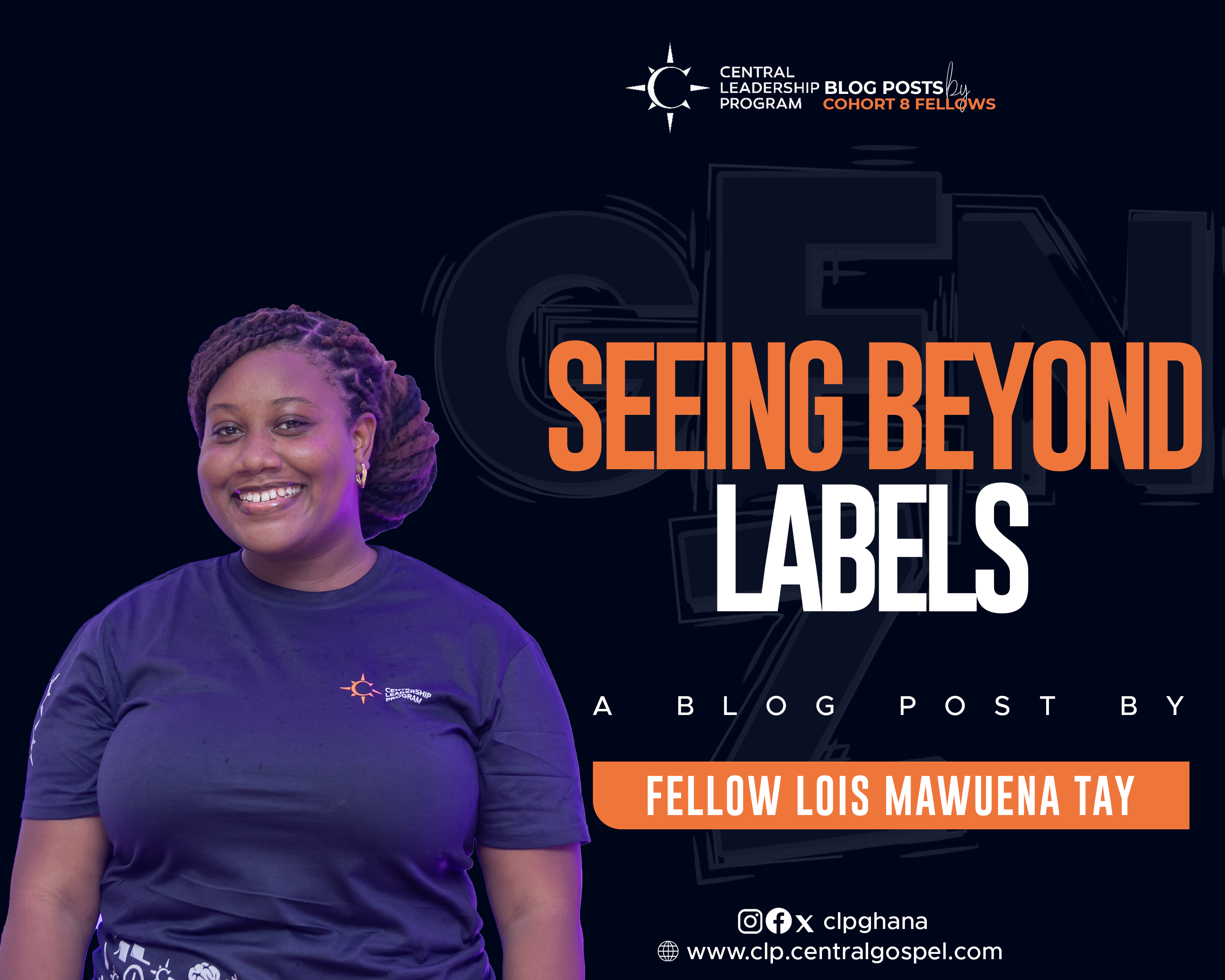
Written by Fellow Lois Tay