There are moments in life when the greatest obstacle standing between us and our potential is not a lack of ability, it is the limits we have accepted.
"Not by might nor by power, but by my Spirit," says the Lord Almighty.
— Zechariah 4:6 (NIV)
There are moments in life when the greatest obstacle standing between us and our potential is not a lack of ability, it is the limits we have accepted. Sometimes those limits come from society. Sometimes they come from failure. More often than not, they come from our own minds.
Reading Do Hard Things by Alex and Brett Harris challenged me to confront those limits. At the same time, I found myself repeatedly reflecting on Zechariah chapter 4, particularly God's message to Zerubbabel: "Not by might nor by power, but by my Spirit." Although these two texts come from completely different contexts, they meet at one powerful truth: God never intended us to be defined by limitations.
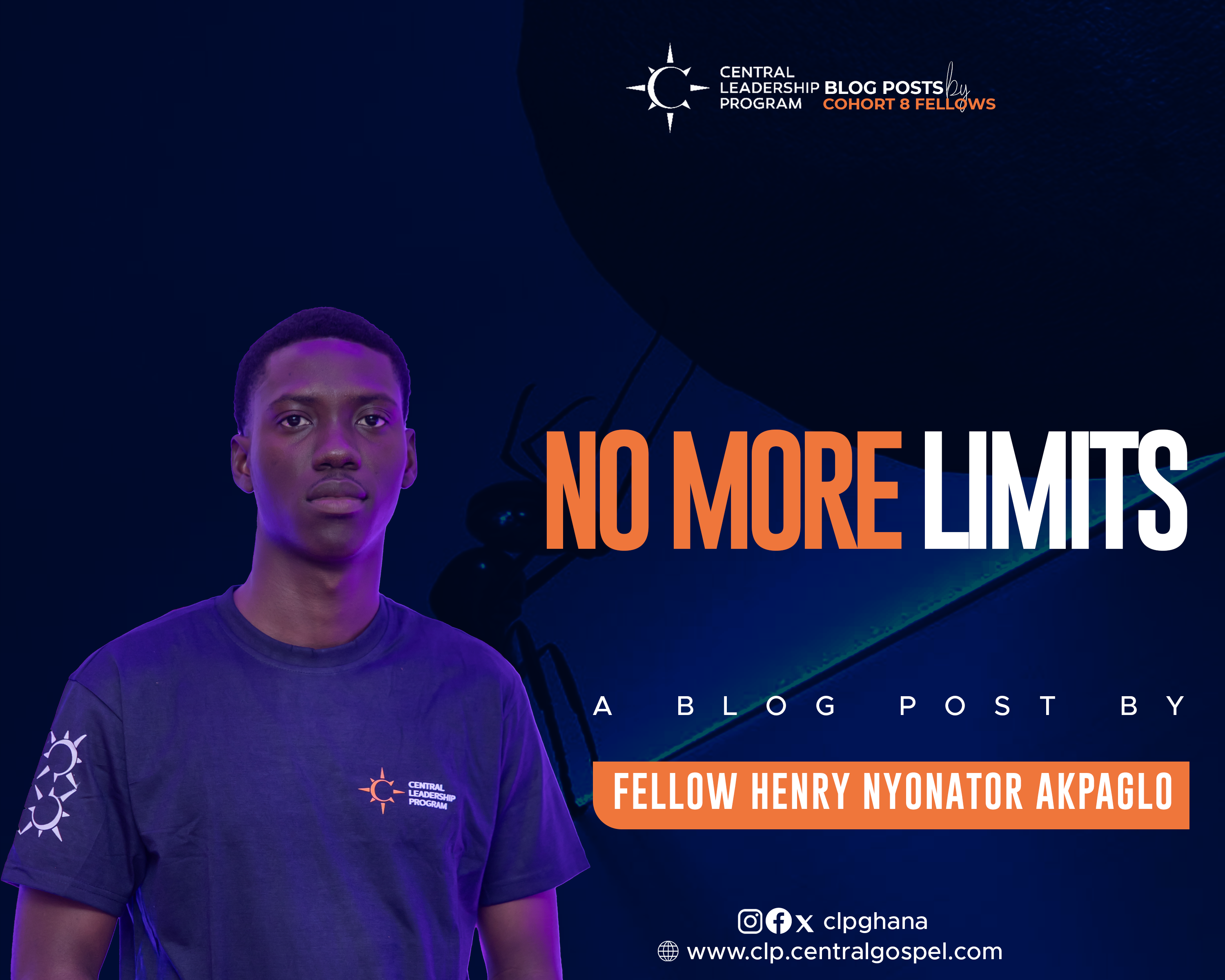
This realization inspired the title of this blog: No More Limits.
The Limits We Learn to Accept
One of the strongest messages in Do Hard Things is that society often places low expectations on young people. Instead of expecting excellence, responsibility, and leadership, it encourages comfort, entertainment, and mediocrity. Eventually, many people begin to believe those expectations themselves.
As I read the book, I realized that this problem is not limited to teenagers. Adults also live with invisible ceilings.
We tell ourselves:
"I'm not experienced enough."
"I'm too quiet to lead."
"Someone else can do it better."
"I'll start when I'm more confident."
These statements sound harmless, but over time they become boundaries we rarely question. We begin to confuse our fears with reality.
I have found myself thinking this way more times than I would like to admit. There have been opportunities I hesitated to pursue because I felt unqualified. There were moments I questioned whether I was capable enough, knowledgeable enough, or confident enough. Looking back, I realize that many of those limits were not imposed by anyone else, they were created by my own thinking.
Zerubbabel Faced an Impossible Task
Zechariah chapter 4 tells the story of Zerubbabel, the governor responsible for rebuilding God's temple after the Israelites returned from exile.
The task was enormous.
Resources were limited.
The people were discouraged.
Opposition surrounded them.
Humanly speaking, the project looked impossible.
Yet God did not respond by giving Zerubbabel a better strategy or more resources first.
Instead, He gave him a different perspective:
"Not by might nor by power, but by my Spirit."
God was reminding Zerubbabel that success would not ultimately depend on his own strength but on God's power working through him.
Then comes another remarkable statement:
"What are you, mighty mountain? Before Zerubbabel you will become level ground." (Zechariah 4:7)
That verse has stayed with me.
Mountains represent obstacles. They look permanent. They seem impossible to move.
But God speaks as though the mountain is already defeated.
Sometimes the greatest mountain is not in front of us, it is inside us.
Doing Hard Things Requires Faith
The Harris brothers repeatedly encourage readers to embrace difficult challenges instead of running from them. They argue that growth happens when we willingly accept responsibilities that stretch us.
I appreciate this message because it rejects the idea that life should always be easy.
However, reading Zechariah reminded me of something equally important.
Doing hard things is not about proving how strong we are.
It is about trusting God enough to step into something bigger than ourselves.Without faith, "doing hard things" can easily become self-reliance.
Without action, faith can become passive.
The two belong together.
God calls us to move.
God supplies the strength.
My Own "Mountains"
This book forced me to ask a difficult question:
What mountains have I allowed to limit me?
For me, the answer wasn't difficult to find.
Sometimes it is fear.
Fear of making mistakes.
Fear of not meeting expectations.
Fear of stepping into leadership before feeling completely ready.
There are also moments when I compare my journey to others and wonder whether I am progressing fast enough.
Yet when I honestly reflect on God's faithfulness, I realize that He has consistently placed opportunities before me that required me to grow. None of them came at a time when I felt fully prepared.
Perhaps that was intentional.
God often calls us before we feel ready because He wants us to depend on Him rather than ourselves.
Small Steps of Obedience
One lesson I loved from Do Hard Things is that extraordinary lives are built through ordinary acts of obedience.
Leadership begins by taking responsibility.
Confidence grows by speaking even when your voice shakes.
Discipline develops by consistently doing what needs to be done.
Character is formed one difficult decision at a time. Zechariah reinforces this beautifully.
Later in the chapter we read:
"Who dares despise the day of small things?" (Zechariah 4:10)
That verse challenged me deeply.
We often celebrate big achievements while overlooking small beginnings.
Yet almost everything significant starts small.
One conversation.
One decision.
One opportunity accepted.
One habit changed.
One act of obedience.
Sometimes we delay God's work because we are waiting for something bigger, while God is asking us to be faithful with what is already in front of us.
No More Limits
For me, "No More Limits" is not a declaration that life will suddenly become easy.
It is a decision.
A decision to stop allowing fear to dictate my choices.
A decision to stop measuring my future by my current abilities.
A decision to believe that God can accomplish more through a willing heart than through natural talent alone.
It also means rejecting the low expectations that Do Hard Things warns against. Instead of asking, "What's the easiest path?" I want to ask, "What is God calling me to do?"
Sometimes that calling will involve difficult conversations.
Sometimes it will involve leadership.
Sometimes it will involve learning skills that seem overwhelming.
Sometimes it will simply mean remaining faithful when progress feels slow.
Whatever the challenge may be, I do not want fear to be the reason I say no.
Final Thoughts
Reading Do Hard Things alongside Zechariah chapter 4 has changed the way I think about limitations.
The Harris brothers challenged me to reject the low expectations that often hold people back. Zechariah reminded me that while God calls us to do hard things, He never expects us to accomplish them by our own strength.
That combination is powerful.
Yes, I should embrace difficult challenges.
Yes, I should step outside my comfort zone.
Yes, I should pursue excellence.
But I should do all these things knowing that the outcome does not rest solely on my ability. It rests on God's Spirit working through ordinary people who are willing to obey.
As I continue growing in my faith, my career, and my leadership. I want this truth to remain at the center of my journey:
No more limits.
Not because I suddenly believe I can do everything.
But because I believe that when God calls me to something, He is able to equip me for it.
The mountains may still be there.
The challenges may still be difficult.
The journey may still require courage.
But by His Spirit, mountains become level ground, and what once looked impossible becomes another testimony of God's faithfulness.
Written by Fellow Henry Nyonator